Going Bald? Just Shave It Off, Stud

You start noticing a little extra hair in the sink. The corners of your hairline begin their slow retreat. One day, you see it in the mirror—your dome’s going bare.

Relax, brother. You’re not broken. You’re becoming part of a proud lineage of legends who ditched the mop and rocked the clean dome with confidence.

You’re in Good Company

Let’s roll call a few titans who didn’t need hair to dominate:

  • Bruce Willis – Action icon. Bald and badass.
  • Jason Statham – Doesn’t need hair to be an ass-kicking legend.
  • The Rock – Lost his locks, gained the world.
  • Michael Jordan – Greatest of all time, no hair.
  • Patrick Stewart – Sophisticated. Commanding. Bald since the Enterprise.

Balding isn’t a curse—it’s a transformation. You either slump…or stride into your next phase like a man with nothing to prove.

Just to Leave No Stone Unturned, What Are Your Options?

1. Shave It Clean (My Choice)

  • Low-maintenance. Dominant. You’re not clinging—you’re claiming.
  • Pair it with muscle and some facial hair? Game over.
  • Maintenance becomes ritual. Masculine. Meditative.
  • Easy to DIY.
    → Pro Tip: Grow your facial hair. Nature’s trade-off—and it slaps.

2. Buzz Cut

  • A softer entry if you’re not ready to go full chrome dome.
  • Still looks sharp, masculine, and intentional.
  • Gears you up to eventually go full razor.
  • Easy to do at home.

3. Keep Fighting

Want to fight the hair loss? You’ve got tools. But they come with tradeoffs.

  • Minoxidil (Rogaine): Over-the-counter topical. Might slow the loss, maybe regrow some—but results vary.
  • Finasteride (Propecia): Prescription DHT blocker. Lowers androgens—and brother, I don’t like anything that steals your edge. Use with extreme caution.
  • Microneedling, laser therapy, PRP: Experimental. Expensive. Results all over the place.
  • Transplants: The nuclear option. Costs high. Commitment high. Results vary.

Fighting hair loss is fine. But chasing it at the cost of your fire? That ain’t the Builder way.

Bottom Line: Some guys get results fighting it. Some don’t. But know this: every option costs something—money, time, or hormones. Do your homework before you go into battle.

Just Shave It Off, Stud

Rock that dome with pride. Build muscle. Grow some killer facial hair. Walk tall.

Adapt. Dominate. Build—even when the hairline retreats.

Being a badass isn’t rooted in follicles—it’s in strength, presence, and the way you carry yourself.

It’s not the hair. It’s the fire in your eyes.

Declare Your Independence

Muscle and Freedom: Declare Your Independence

In 1776, a few men put ink to paper and changed the course of history.

They didn’t ask for permission. They didn’t wait until it felt safe. They stood up, said “No more,” and declared their independence from tyranny.

It wasn’t pretty. It wasn’t easy. But it was the beginning of something better.

So here’s your reminder, brother:

You can declare your independence too.

From smallness. From softness. From weakness. From the systems and habits that made you small, soft, and weak.

You don’t need fireworks to make a statement. You just need to draw the line.

You just need to decide that today is the day you stop depending on comfort, distractions, and dopamine hits…

…and start becoming the man who builds his life, brick by brick.

No one’s coming to save you. And no one can do your lifting for you.

Today, while the grills are hot and the flags are flying, ask yourself:

What are you still depending on that’s holding you back? What would it look like to break free—for real?

And when will you stop waiting and finally declare your independence?

Because freedom isn’t given.

It’s built.

One choice. One training session. One rep at a time.

So build it. Own it. And light your damn fuse.

Happy Independence Day.

Sunday Sendoff #2: Buckle Up or Get Wrecked

Brickwall's Sunday Sendoff

Want to live and lift longer? Want to keep training, fathering, building, and kicking ass into your 80s and beyond?

Start by doing this one thing every time you get in a vehicle:

Click that damn seat belt.

It’s free, takes two seconds, and it could save your life—or the life of someone you love.

The difference between walking away from a crash and never walking again often comes down to that tiny click.

This isn’t just about you, brother. It’s about setting the standard. Be the man who doesn’t let anyone ride unbelted. Your lady. Your kids. Your friends. Everyone clicks in—or the car doesn’t move.

Don’t die doing 45 in a Corolla because you wanted to look cool.

Click in. Lead by example. Lift for life.

Read more at the NHTSA

Guiding Principle

Easy, free, simple…click it.

Something to Ponder

What are you tolerating that you know you shouldn’t? What are you letting slide that you should’ve already handled? Why haven’t you? And how is it costing you—your edge, your happiness, your livelihood?

See You In the Arena

This week is just about over. Next week is just about here. Let’s keep building.

Brick by brick.

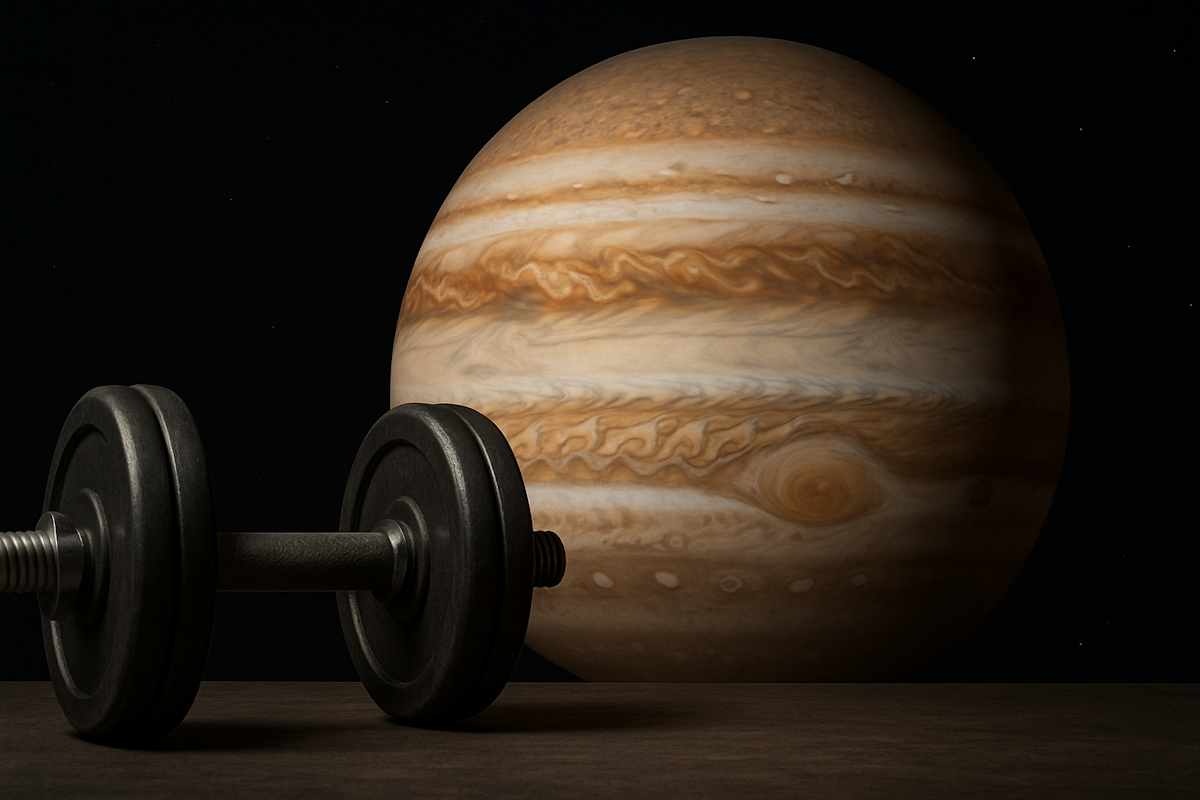
Jupiter Gains: The Gravity of Growth

Jupiter Gains: The Gravity of Growth

Ever wonder what you’d weigh on Jupiter?

Probably not. But I did.

At 200 lbs on Earth, I’d clock in at a crushing 528 pounds on Jupiter. That’s like wearing a 328-lb weighted vest 24/7.

Walking? Brutal leg day.

Getting off the couch? Core crusher.

Climbing stairs? World-class GPP.

Sure—Jupiter’s a gas giant. No solid ground. No oxygen. No gym.

Doesn’t matter.

Because Jupiter’s not the destination.

The resistance is.

And here’s the thing—you don’t need a spaceship to chase this pressure.

You’ve got the weights, so you’ve got the choice to get heavier—every day.

So no, we’re not heading to Jupiter.

We’re bringing Jupiter to the gym.

Strap in. Stack plates. Embrace the resistance.

Let’s get heavy.

Sunday Sendoff #1: Muscle Takes Root In Patience

Brickwall's Sunday Sendoff

It’s finally warm out, and I’ve been spending more time in nature—hiking, breathing, listening.

And it hit me:

Nature works slow…but steady.

Take the oak tree. It can take 40+ years to become a towering beast.

No shortcuts. No gimmicks. Just time and unwavering growth.

That’s exactly how bodybuilding works.

If you’re walking into the gym thinking you’ll look like Sandow in two weeks, you’re setting yourself up for disappointment.

You’re a seedling. Or even a sapling. And that’s okay—because every oak tree started the same way.

Train hard. Eat right. Sleep deep. Recover well. Stay consistent.

Day by day. Week by week. Month by month. Year by year.

One day, you’ll look down—and you’ll be a damn oak among shrubs.

Guiding Principle

It doesn’t happen overnight. It takes years. Stay the course.

Something to Ponder

You train with intention, but do you live with it? More specifically, did you choose where you live, or did someone else?

Where you live affects every area of your life…is it a good fit for you?

See You In the Arena

This week is just about over. Next week is just about here. Let’s keep building.

Brick by brick.

Ranking All Three BTTF Movies (and Why Part I Is Close to Perfection)

BTTF Fan Art

I’m a gigantic BTTF fan. Always have been. Always will be.

All three movies bring something to the table, but like anything worth ranking—some rise above the rest. So here’s my totally correct (and maybe controversial) fan ranking of the legendary time-travel trilogy.

#1: Part I – The Undisputed King

The origin story hits hard.

Bob Gale came up with the idea after finding his dad’s old high school yearbook and wondering: Would we have even been friends? That’s the seed that bloomed into a movie about legacy, identity, and whether we can ever truly understand where we come from.

It’s easy to see why this landed. We’ve all wondered what our parents were like when they were our age. What were the pressures? The culture? Could we have survived in their world? Did they even lift? 😆

Part I answers those questions in the most fun way possible—by throwing Marty into 1955 and making him dodge his own mom’s romantic advances, bond with his not-so-alpha dad, and try not to erase his existence.

It’s tight, funny, layered, and unforgettable. Magic from start to finish.

#2: Part II – The Chaotic Middle Child (But Still a Banger)

Let’s be honest—Part II is a mess. But it’s the good kind of mess. The creative chaos kind.

Doc warns against messing with the future…then immediately convinces Marty to go mess with the future. Classic.

In this one, we time-hop through:

  • 2015 (hoverboards and self-lacing Nikes)
  • 1985A (Biff’s hellish casino-run dystopia)
  • 1955 again (yes, more Biff shenanigans)

You even get multiple Martys, multiple Docs, and a sports almanac that basically becomes the McGuffin of every gambler’s fantasy.

What makes this one resonate—especially with guys like us—is the “what if” factor. What if you could get a glimpse of your future? Would you use it? Would it corrupt you? Would you do the work—or try to game the system?

Also, I swear this movie is two full movies jammed into one (I actually read somewhere that it was supposed to be two movies). And I’m here for it.

#3: Part III – Fun, But Not Top Tier

Part III isn’t bad—it’s just not Part I or II.

We’re in 1885 now, and while it’s cool to see Hill Valley as a dusty Western town, it lacks the punch of the others. Fewer familiar characters. Slower pacing. And let’s be real—the Doc/Clara romance just doesn’t hit emotionally (I could do without the love stories in most movies, actually…just give me the facts and explosions!).

And the time-traveling steam train at the end? Ehhh. I get that it’s whimsical, but it strays into too whimsical.

Still, it wraps the trilogy well, and there’s something admirable about ending with a bit of optimism. The past is behind us. The future is unwritten. You can make it a good one (or a bad one if you don’t get your shit together). You’re in control, and that’s Builder through and through.

Final Verdict:

  1. Part I – Classic. Timeless. Near-perfect.
  2. Part II – Wild, messy, fascinating.
  3. Part III – Still worth watching, just not as memorable.

How Would You Rank Them?

And if you could time-travel, would you go back to fix the past…or forward to cash in on what’s coming? Food for thought.

I Ditched My Smart Watch for a Simpler, Less Techy Casio

Sometimes, you just gotta say “screw this” to all the tech crap and go simple. No tracking, no apps, no invisible judge on your wrist telling you you’re lazy. So I ditched my fancy smartwatch and grabbed a Casio W219H for under 20 bucks. And damn, it’s been a breath of fresh air.

Don’t get me wrong—smartwatches are cool toys. Tech’s done some awesome things for us. But tracking every damn step and calorie? That shit’s exhausting and makes you feel like garbage. My watch was always lurking, waiting to call me out: “Only 2,293 steps today, loser? I thought you had more fire.”

Enter the Casio. This bad boy doesn’t give a damn about steps, heart rate, or notifications. It just tells time and date, lights up when it’s dark, and that’s it. Like a kettlebell or a ‘57 Chevy Bel Air, it’s old-school badassery, no gimmicks.

The world’s obsessed with tech, but sometimes you gotta rebel and strip it down. When smartwatches become sentient and start thinking they’re the boss, I’ll be there, ready to rock with my Casio on—screaming “I told you so!”

You ever feel tech’s got you in a chokehold? Maybe it’s time to slap on something real and remind yourself who’s boss.

Building Muscle: What’s Going On Under the Hood? Why Can We Build Muscle? And How to Effectively Build It

Building Muscle - What's Going On Under the Hood? Why Can We Build Muscle? And How to Effectively Build It

Muscle is important. It’s what allows you to move through the world. Whether you’re picking up your kids, carrying groceries, hiking a mountain, or lifting weights, muscle makes it possible. Building it won’t solve every problem in your life—but it’s one of the best investments you can make in your body.

Have you ever wondered what’s going on under the hood when it comes to building muscle? And why we can actually build muscle? And also, maybe most importantly, how to effectively build muscle?

That’s what we’re going to dive into.

Let’s peel back the layers, open up the hood, and figure out how this thing works—like we’re wrenching on a ’57 Chevy Bel Air.

Just What the Heck Actually Is Muscle?

Muscle is contractile tissue—a form of soft tissue that your brain commands to pull on your bones via tendons. This is what lets you move at a joint.

Any movement—walking, picking up your kids, or lifting weights—relies on this process.

You can move in many ways, at many speeds, all because of muscle (plus tendons, bones, and other systems, of course).

That’s about as deep in the weeds as we need to go.

Why We Can Build Muscle

We know what muscle is. So why can we get bigger muscles?

It comes down to one word: adaptation.

When you impose stress on your muscles—say, by lifting weights—your body adapts by improving its ability to handle that stress. That’s where hypertrophy (muscle growth) comes in.

What Triggers Muscle Growth?

  • Mechanical tension: Lifting weights or creating strong muscular contractions through a full range of motion.
  • Muscle damage: Microtears can occur from eccentric loading (the lowering part of a lift).
  • Metabolic stress: That burning pump you feel is a buildup of metabolites—lactate, hydrogen ions, etc.—which may contribute to muscle growth.

Note: Current research shows that mechanical tension is the primary driver of hypertrophy. Muscle damage and metabolic stress can support it, but they aren’t essential for growth.

Recovery: Where the Real Growth Happens

All that hard training just sets the stage.

The real magic happens when you’re resting and recovering. This is when your body repairs muscle fibers—and if conditions are right, it overcompensates and builds back bigger and stronger.

But that only happens if:

  • You’re training hard enough to warrant adaptation
  • You’re giving your body the raw materials (food)
  • You’re allowing proper recovery time (low stress, good sleep)

It’s also important to note that muscle growth is slow. You build a tiny bit of muscle after each proper workout. So think in terms of months and years, not days or weeks.

How to Build Muscle Effectively

We’ve covered the what and why. Now here’s the how.

1. Actually Train

A lot of guys at the gym aren’t really training—they’re going through the motions, like they’re browsing Netflix.

Your body resists change. It wants homeostasis (status quo). So to force muscle growth, you’ve got to challenge it hard enough so that it has to respond.

That means:

  • Lifting close to failure
  • Staying mostly in the 3–15 rep range
  • Using sensible rest intervals

You should feel like you’ve been in a fight after a good set. Muscles burning, breathing heavy, face twisted up. If you’ve never let out a few involuntary curses at the end of a set…you’re not there yet.

Bonus: Two Types of Muscle Growth

There are two primary types of hypertrophy:

  • Myofibrillar Hypertrophy: This increases the size and number of the contractile units (myofibrils) in your muscle fibers. It’s associated with strength and density—think powerlifters or gymnasts.
  • Sarcoplasmic Hypertrophy: This increases the volume of fluid and non-contractile elements (like glycogen and sarcoplasm) in the muscle cell. It’s what gives that full, pumped look.

Most well-rounded training stimulates both, but the emphasis depends on how you train:

  • Lower reps (3–6) and heavy weights = more myofibrillar
  • Moderate reps (8–15) with volume = more sarcoplasmic

Want the best results? Blend both styles into your routine. Train heavy some days, and pump up the reps on others…and remember to always use impeccable form any amount of reps you do.

2. Train Consistently

Muscle growth is a compounding process. That means you need consistency.

Like I said earlier, think in terms of months or years.

What about frequency? How many days a week should you train?

3 days is too little, there’s just too much to do. 4 days you’re getting there. Think 5-6 days a week for real results.

Note: This doesn’t mean training each muscle 5–6 times a week. It means hitting certain muscles in turn 5-6 days a week so you can spread your volume out and blast each muscle group throughout the week.

Tip: What matters most is your total weekly volume per muscle (10+ hard sets/week per muscle is a good target). If you choose to train 3 days a week, you’ll have to do a lot more each training session, possibly hindering focus and intensity.

If you think you don’t have the time, then take a long, hard look at what you’re doing throughout the day. You’ve got more time than you think if you cut down TV, scrolling, and texting.

A home gym, a gym at your apartment complex, or a gym at work can also really help in this regard.

3. Eat (Like You Mean It)

Muscle is made of amino acids (protein), and building it requires energy. You must give your body what it needs to grow.

This means:

  • High-protein intake (~0.7–1g per lb of body weight)
  • Carbs and fats for fuel and hormones
  • Micronutrients from whole foods for health and proper function
  • Fiber for digestion and health

Focus on:

  • Meat, eggs, dairy
  • Fruits and vegetables
  • Whole grains
  • Healthy fats and oils

And yes—you can eat cheeseburgers and pizza. Just not only cheeseburgers and pizza.

4. Be in a Slight Calorie Surplus

To build muscle, you need to eat more than you burn—just slightly.

Too little? No growth. Too much? Fat gain.

Stick to a modest daily surplus (200–300 calories above maintenance).

5. Periodically Cut

You can’t bulk up forever, or you’ll end up round and soft.

Cycle in short cutting phases—eat slightly below maintenance to shed body fat while maintaining muscle. Keep training intensity high, and protein up.

6. Live Lower-Stress

Cortisol, the stress hormone, is catabolic—it breaks things down. Chronic high cortisol hinders muscle gain and promotes fat storage.

To reduce cortisol:

  • Sleep more
  • Limit caffeine
  • Manage work and life stress
  • Meditate
  • Chill out and channel Zen Slacker sometimes

Growth hormone and testosterone thrive in low-stress environments.

7. Sleep Like a Champion

If you’re not sleeping 7–9 hours a night, you’re leaving gains on the table.

Sleep supports muscle growth by:

  • Increasing testosterone and growth hormone
  • Repairing muscle tissue
  • Reducing cortisol
  • Restoring mental clarity and drive

Sleep is not optional. It’s the foundation.

Final Word

Building muscle isn’t complicated—but it’s not easy. It takes hard training, focused nutrition, consistent recovery, and discipline over time.

You’ll be sore. You’ll be tired. And you’ll wonder if it’s working.

But one day you’ll notice it.

You’re stronger. More capable. More energetic.

And yes…

Your chest is thicker. Your arms are bigger. Your lifts are climbing.

And it’ll all be worth it.

Build the muscle.

Build the strength.

Build the capability.

Then use that body to build a great life.

Sources

Schoenfeld, B. J. (2010). The mechanisms of muscle hypertrophy and their application to resistance training. Journal of Applied Physiology, 108(4), 1–10. https://pubmed.ncbi.nlm.nih.gov/20847704/

Morton, R. W., Murphy, K. T., McKellar, S. R., et al. (2022). A systematic review, meta-analysis and meta-regression of the effect of protein supplementation on resistance training-induced gains in muscle mass and strength in healthy adults. Sports Medicine, 52(5), 1085–1101. https://pubmed.ncbi.nlm.nih.gov/35187864/

Grgic, J., Schoenfeld, B. J., Davies, T. B., & Lazinica, B. (2019). Effects of resistance training frequency on gains in muscular strength: A systematic review and meta-analysis. Sports Medicine, 49(5), 793–807. https://pubmed.ncbi.nlm.nih.gov/30558493/

Dinyer, T. L., et al. (2022). Weekly Sets Per Muscle for Maximizing Muscle Hypertrophy: A Systematic Review and Meta-Analysis. Frontiers in Sports and Active Living. https://www.frontiersin.org/journals/sports-and-active-living/articles/10.3389/fspor.2022.949021/full

Kravitz, L. (n.d.). How Do Muscles Grow? University of New Mexico. https://www.unm.edu/~lkravitz/Article%20folder/musclesgrowLK.html

Walker, M. (2017). Why We Sleep. https://www.sleepdiplomat.com/author